After her husband died, Katharine Park grew lonely. But she knew she was not alone. She dedicated her later years to addressing isolation among older New Yorkers. In her will, she established a fund at The Trust that continues her legacy of care. Katharine’s fund supports the grants featured in this article.
Sabrina Salas was in high school when she volunteered as a technology coach for older adults at Search and Care, a nonprofit in upper Manhattan. She was paired with a woman eager to learn how to use Facebook to keep up with her family overseas. Salas visited her at home once a week.
“I quickly realized that a big part of our sessions was about us getting to know each other,” Salas said. “I was applying for college, and she would ask for an update each week: ‘Did you finish that essay?’ ‘Have you heard back?’ She was right alongside me every step of the way.”
In 2023, the U.S. surgeon general declared social isolation and loneliness a national epidemic, with older adults and young people most at risk. Both conditions are associated with a host of health concerns, including heart disease, anxiety, depression, and dementia.
Many of Search and Care’s more than 1,400 clients live alone, often in walk-ups; lack family support; and have mobility challenges that make it hard to leave home—increasing their risk of isolation. A grant from The Trust is helping the nonprofit expand its services, which are free and range from counseling and medical escorts to pet care and emergency planning.
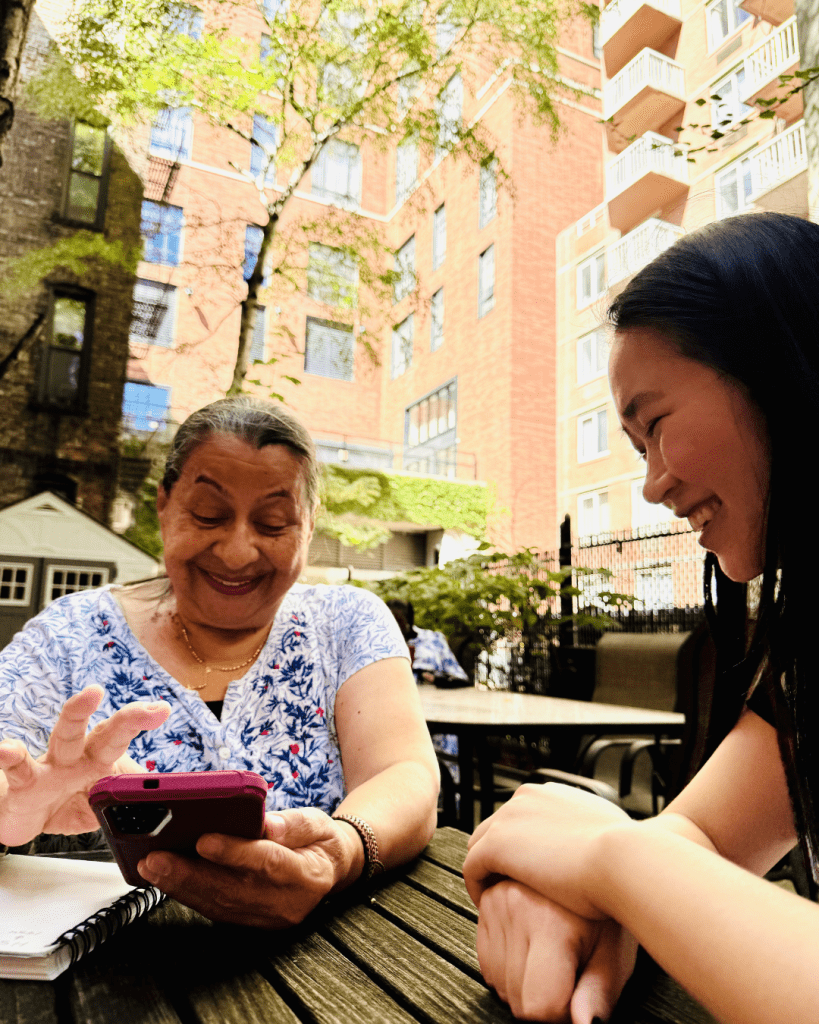
Participants in Search and Care’s Silver Circles technology coaching program attend a tech-centered event at the nonprofit’s office on East 94th Street in Manhattan. Photo by Jenn Zaratan.
“Everything we do is designed to keep people safe and connected at home,” said Executive Director Aaron Rooney. “We help people thrive in their later years, in their own homes, and out of nursing homes and hospitals for as long as possible.”
Salas returned to Search and Care after college as a paid technology coach. In addition to seeing her steady roster of clients, she provides training in MyChart and telehealth services to patients at Mt. Sinai Hospital.
“We get our clients involved in their own care to allow them to be as independent as they can be,” said Esther Henderson, who also got her start with the nonprofit as a high school student, working as a “teen shopper” in 1990.
Henderson quickly discovered her talent for listening to clients and earning their trust. Today, she works with the nonprofit as a care manager.
“In many cases, we are as close to family as somebody has,” Rooney said. “We take that role very seriously and really strive to live up to it.”
A space for community, creativity, and volunteer opportunities
Nine years ago, Audrey Melkin told a friend at her synagogue that she wanted to enroll in art classes in retirement but was worried she’d feel intimidated.
Her friend told her about Council House, home to the National Council of Jewish Women New York (NCJW NY) on the Upper West Side.
NCJW NY is a 130-year-old organization guided by progressive Jewish values. It combines direct services with advocacy to advance social justice for historically excluded and under-resourced New Yorkers.
A robust volunteer network supports its programs, which include literacy coaching for grade-schoolers, enrichment classes for older adults, a food pantry and community kitchen, its “Back 2 School Store” where kids shop for free, and more.
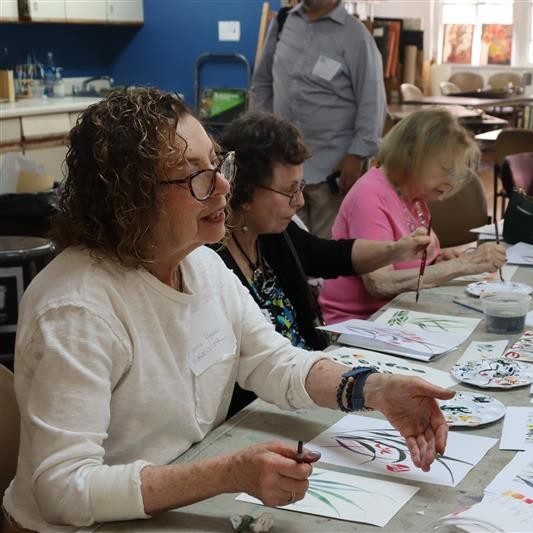
A Trust grant is helping NCJW NY address social isolation among older adults by expanding the reach of classes and events offered through its Council Lifetime Learning program. Participants often take advantage of multiple classes and services.
“We let people know when they come to Council House for classes, that they can do more than just learn new skills,” said Director of Community Programs Okwuchi Tracey Onyeuche. “We offer a welcoming and comfortable space, where people can connect with others and support one another, while building on their strengths and interests.”
Every December and May, the nonprofit hosts an arts fair where participants can exhibit and sell artwork and enjoy special programs, which last year included Drag Bingo.
“I hear from people that when they retire, they experience more depression and loneliness. As people age, their core group often gets smaller,” said Program Coordinator Debbie Aronson. “This is a place where they can create that community they’re missing.”
Melkin found the art classes eased her transition into retirement and helped her expand her social circles.
“There are two groups I’m now a part of: the stained-glass community and the pastels community,” she said. “It’s a new set of friends.”
Melkin also volunteers for NCJW NY’s Back 2 School Store and as an ambassador for its programs.
“When I tell people about the classes, I let them know they’re very non-intimidating, and we can all have different goals,” she said. “For some, it’s really important to improve their skills. I gradually realized that my main goal was to have fun making art, and to be supported.”