“My first time in the homeland was amazing,” said Shawn Stevens. “I felt the spirit of the land, the spirit of our ancestors, resonating everywhere.”
Stevens is a Tribal Elder of the Stockbridge-Munsee Band of Mohican Indians, a federally recognized Nation representing the diaspora of Lenape and Mohican people who were forcibly removed from their land by European colonists and, later, the U.S. government.
Lenape and Mohican ancestral lands stretch across the Hudson, Housatonic, and Delaware River valleys in present-day New York, New Jersey, Pennsylvania, Massachusetts, Vermont, and Connecticut.
Today, the Nation’s young people rarely travel beyond the boundaries of their reservation in Shawano County, Wisconsin, where the impacts of centuries of colonial violence and discriminatory government policies have been passed down through generations and continue to affect daily life.
Some Tribal Elders have firsthand experience with these injustices. Until the 1970s, the federal government forcibly placed many Native American children in harmful boarding schools, some of which were run by the Catholic Church, intended to strip Indigenous children of their culture and traditions.
“I’ve done a lot of work reclaiming language and culture and trying to heal intergenerational trauma,” said Stevens, who, with his sister Wanonah Kosbab, leads the nonprofit Red Road Reclamation. “It was a revelation, when I realized how much it affects us all.”
As Stevens’ trips between Wisconsin and his ancestral homelands became more frequent, he grew determined to find a way to invite young people from his reservation to make the same journey.
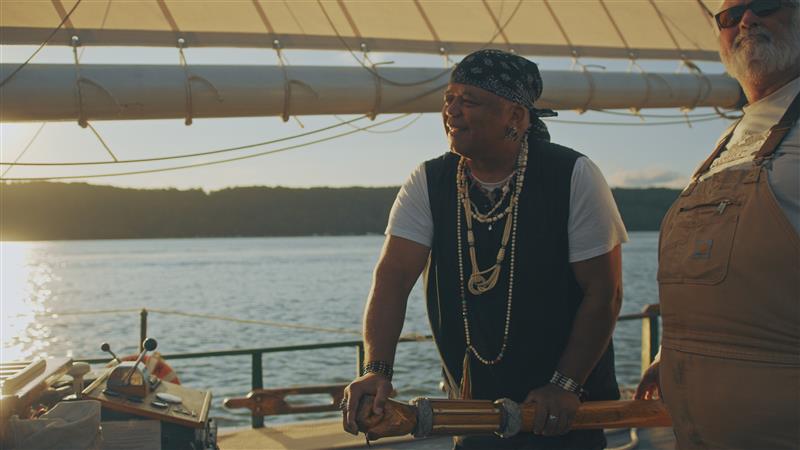
The opportunity came from an unlikely alliance. In 2023, the Dominican Sisters of Hope’s Land Justice Team, in partnership with the nonprofit Land Justice Futures, invited Stevens to present at their three-day retreat.
Founded in 1995, the Dominican Sisters of Hope is a congregation of more than 80 Catholic nuns dedicated to social justice. Its offices at the Center at Mariandale in Ossining, New York, are situated on 61 acres of Lenape ancestral land on the banks of the Hudson River.
“Knowing there were people here who have such a deep kinship with all of creation, and how they were displaced from the land that we now happily occupy—it’s a source of shame,” said Sister Lorelle Elcock. “You feel a responsibility.”
For several years, the Sisters had been learning about land justice. In addition to protecting and regenerating the land ecologically, the movement seeks repair for historic injustices to Native Americans and enslaved people.
“It opened up our consciousness,” said Sister Patricia Magee. “We’ve been stewards of this beautiful land, and we have questions as we plan for our future. What will the future of this land be?”
At the retreat, Stevens presented on Native American history and culture and shared traditional music and ceremonies.
“The Sisters were just the kindest people. They were very welcoming,” Stevens said. “When I explained about the mission schools and how that trauma, and before that, the genocidal trauma, affected us, it was very powerful. They knew they couldn’t change the past, but they wanted to help heal.”
The Trust’s Westchester Vice President Laura Rossi and Program Director Lauren Perkins attended the retreat, and the Sisters invited them into a conversation with Stevens that sparked a life-changing partnership.
“Shawn Stevens and the Sisters wanted to explore ways to create healing experiences connected to the land,” said Perkins. “This led Laura and me to consider how we could support inviting Lenape young people to spend time on their ancestral lands in Westchester. We realized the project Shawn described was a perfect match for a fund established through the estate of Harry Mortimer, a longtime New Rochelle resident.”
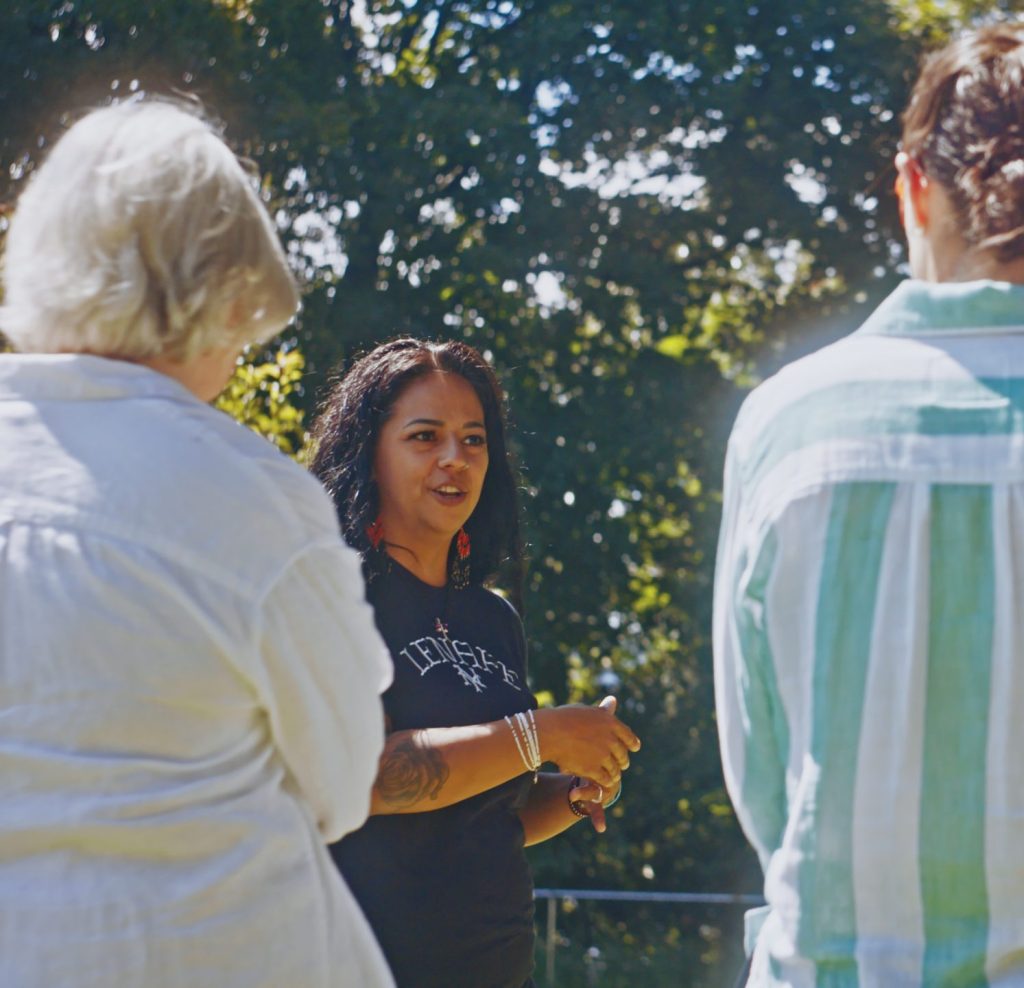
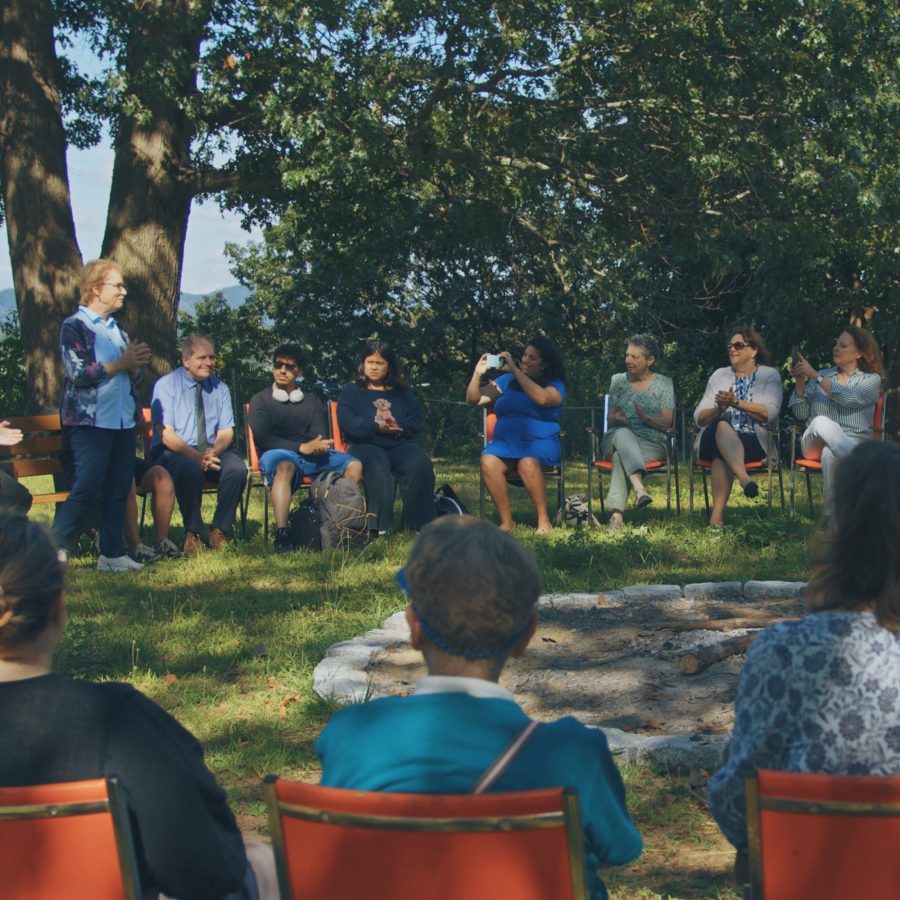
With grants from The Trust’s Mortimer Fund for Native American Children, Stevens and Kosbab created a program that brings young people from their reservation to Mariandale for 10‑day cultural and leadership immersions centered on intergenerational healing and connection to ancestral land. The Dominican Sisters of Hope host the immersions and also participate.
“I was a little anxious at first, not wanting to intrude on what was planned for them. What we learned is that they want to be more in dialogue with us,” said Sister Lorelle. “They want to hear our stories, just as we want to hear theirs. I think that’s been beautiful.”
For Stevens and Kosbab, the immersions are also an opportunity to share moments of Spirit and ceremony and traditional teachings with young people, who often remain isolated on the reservation.
“We believed we could empower our youth,” Kosbab said. “The programming came from Shawn and me discussing what had helped keep us from drugs and alcohol, what helped us walk the Red Road (a metaphor for living a spiritual way of life) when others were struggling.”
Activities include learning to lead traditional ceremonies and visiting culturally significant sites. The young people have visited the Shinnecock Kelp Farmers on Long Island, studied ecosystem preservation and restoration efforts with Riverkeeper along the Hudson, and visited Manhattan, where they initiated a drum circle in the heart of Times Square.
The program at Mariandale continues to grow. This summer, it will include Lenape youth from tribes across the diaspora in the U.S. and First Nations communities in Canada.
Kosbab and Stevens said participants are carrying the immersion experience back to the reservation, serving as youth leaders and peer mentors, pursuing studies in environmental science, and leading gatherings such as artistry jams and open mics focused on culture and community.
“I saw a transformation in the young people over the course of the immersion, a growing confidence,” said Sister Pat. “It’s a pure gift to see that. By the closing circle, they have found their voice. That’s what you want for everyone.”
Read first-person accounts from Wanonah Kosbab and Shawn Stevens here.
Watch short documentary videos about the immersions below.
Special thanks to producer Joe Plante of New Media Storytellers.