“When challenges feel too big for any one person or organization, The New York Community Trust plays a unique role—harnessing the power of collaboration among donors and other funders, public partners, and the nonprofit leaders working on solutions to some of our region’s most intractable problems.
Because we are both close to our donors and deeply embedded in the communities we serve, we can see where support is needed and how to make it go the furthest. And by connecting donors to organizations with smart strategies and the capacity to deliver, we help to ensure that each gift builds on
the last.
The result is more than a series of individual contributions. As you will read in the pages that follow, it is a growing network of investments that reinforce one another, accelerate progress, and compound over time to deliver lasting change across New York City, Long Island, and Westchester.”
—Carrie Trowbridge, General Counsel and Interim President
In 2025, The Trust’s commitment to investing in New York’s green spaces—the Long Island Pine Barrens, the Bronx and Saw Mill rivers, the Brooklyn Greenway, Staten Island’s Freshkills Park, and more—continued through projects that included urban forestry, water quality monitoring, and pollinator habitat restoration.
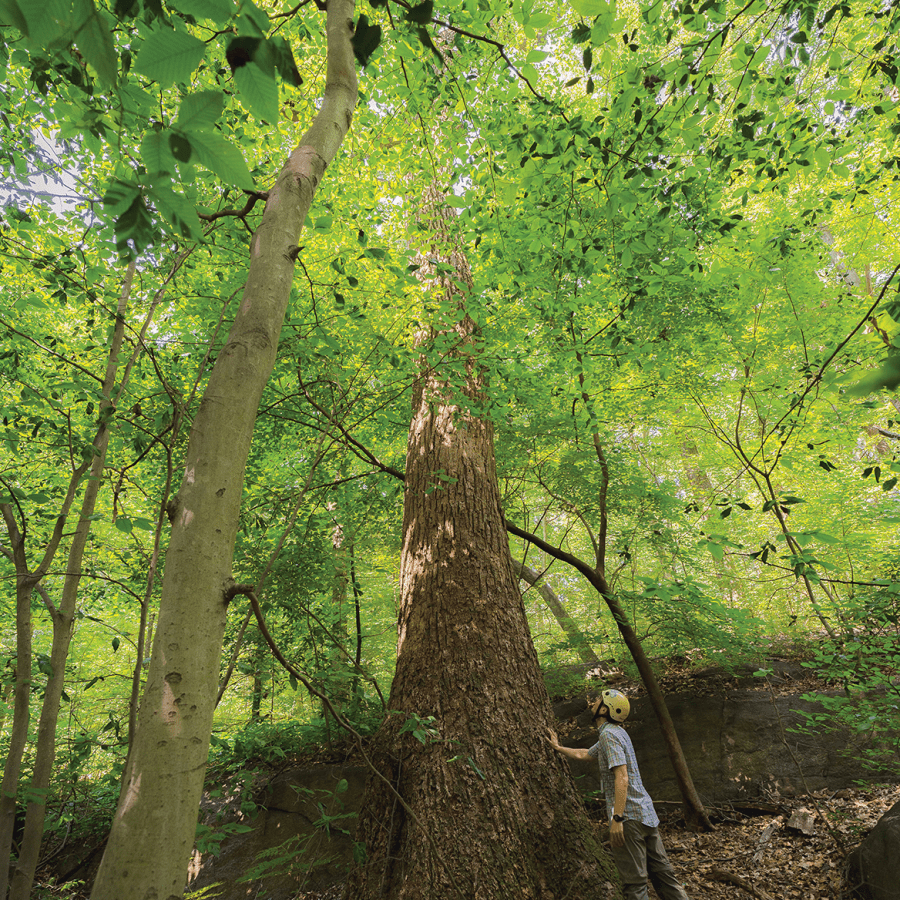
Growing Urban Microforests
Urban tree canopies shade and cool city streets, improve air quality, provide homes for wildlife, and add natural beauty. Yet New York City’s urban forests are up against air pollution, invasive species, disease, limited space, and climate events such as wildfires, extreme heat, and flooding.
“Trees are really heroes for the climate, and the city has some great tree-planting projects. But we’re running into limits on where to put those trees and how to make sure they thrive alongside the communities who depend on them,” said Brad Oberle, associate curator at the New York Botanical Garden (NYBG). “Microforestry is an emerging solution to this problem, where we pack as many trees as possible into a very small place with lots of community investment to get those trees established quickly and growing fast.”
With a grant from The Trust, NYBG researchers are working to create dense urban forests by identifying native trees that thrive in microforests across the five boroughs and building a demonstration microforest in the Bronx. Its team is also exploring how these forests can contribute to climate sustainability goals.
The Trust can support urban forestry and other environmental projects thanks in large part to New Yorkers who have created legacy funds with us.
Mark Burstein discovered The Trust while working for the New York City Department of Sanitation in the early 1990s, when our grant helped the city launch its curbside recycling program. Burstein and his husband, David Calle, later established a fund at The Trust to support the environment and improve life for all New Yorkers in perpetuity. They knew our grantmakers would ensure their legacy responds to changing needs for future generations.
“In 50 years, a team of experts will be doing what we can’t do: researching great nonprofits to support,” said Burstein. “New York City can be an incubator for environment solutions that could be very powerful, and we want some of our resources to support that effort.”
Dr. Ellen Birenbaum spent her career helping people with HIV/AIDS. She first encountered The Trust decades ago, when we made a grant to the community health organization where she was working. She learned that The Trust was one of the first foundations to respond to the HIV/AIDS crisis in the early 1980s.
“I just know that this organization’s heart is in the right place,” Dr. Birenbaum said. Her legacy fund will support community health and gardens in New York City and ecological protection on Long Island.
“New York’s treasured green spaces make communities healthier, more livable, and more climate resilient.”
Grading Local Water Quality
“On the South Shore of Long Island, there are hundreds of spots that are monitored. But the problem is, everybody monitors water quality differently,” said Robyn Silvestri, executive director of Save the Great South Bay. “You can’t compare the data. And if you can’t compare the data, you can’t synthesize it into a letter grade.”
With funding from The Trust, the nonprofit is standardizing protocols for monitoring the bay’s water pollution levels. It will use this research to produce its water quality report card, which will translate complex scientific data to help residents and local politicians track environmental changes across the bay.
For Food. Forever.
“You have to look after your neighbors,” said Peter Levin, an attorney and retired public school teacher.
Peter and his wife, Anna, a former member of the New York City Planning Commission who is also an attorney, created a donor-advised fund at The Trust knowing we could help them identify meaningful projects to support.
In November 2025, the Levins were among dozens of Trust donors who responded swiftly when a government shutdown threatened SNAP benefits for more than 3 million New Yorkers.
“It was a really scary time—just before Thanksgiving. It wasn’t just, ‘I can’t buy food.’ It was, ‘I can’t pay my heating bill. I guess I won’t enjoy a holiday meal with my family,’ ” said Greg Silverman, CEO of West Side Campaign Against Hunger (WSCAH). “The only bright spot was the quick and massive philanthropic response. It allowed us to open more distribution points and buy and distribute more food.”
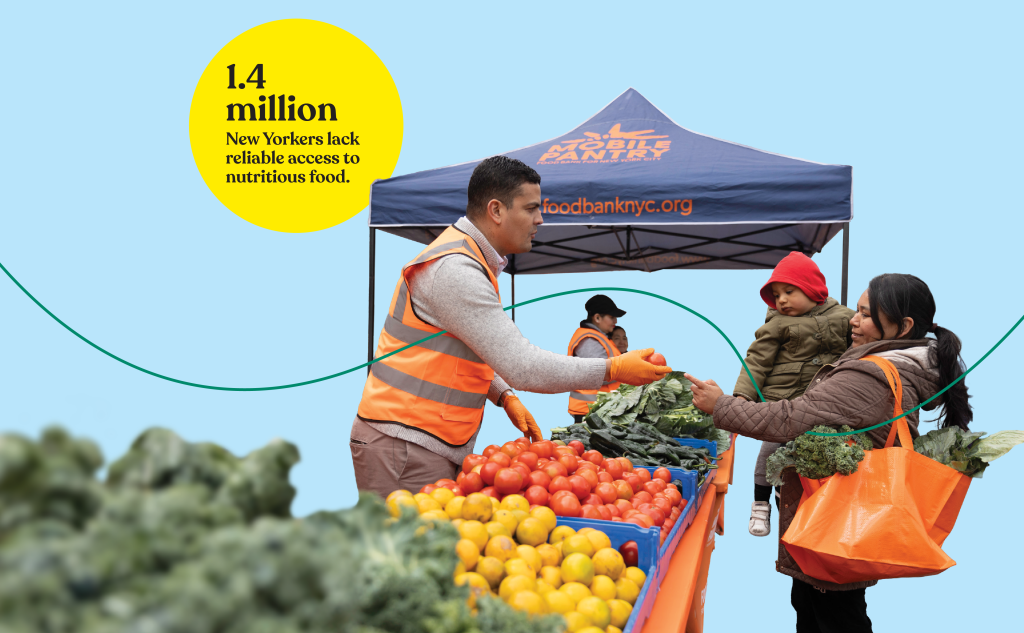
Thanks to our generous donors, The Trust quickly raised over $1 million for seven nonprofits, including WSCAH, that were leading the response.
“It can be tough to know where to give in moments of crisis, when time is of the essence,” said Rebecca Mandelman, The Trust’s EVP and chief philanthropic officer. “Our donors look to us for our local expertise and ability to mobilize support quickly. They also value the opportunity to unite behind a cause and give alongside others—it’s a meaningful experience that helps each individual make a bigger difference.”
In a city that speaks 800 languages, improving the pantry system goes beyond stocking shelves. Many New Yorkers are reluctant to seek help, or struggle to find food pantries in their neighborhoods, especially as locations and schedules change during periods of surging need.
“It’s no secret that there is a really large stigma right now around people who might not speak English, and that creates a greater fear of accessing food when services aren’t available in their native languages,” said Claire Bleiler, chief of staff at Lemontree Foods. “Being able to meet people where they are is really important in getting through that barrier.”
In 2025, Lemontree used a Trust grant to connect 300,000 New Yorkers with food pantries, soup kitchens, and public benefits through its multilingual helpline and online directory. Its newly launched WhatsApp channel helps it reach immigrant communities and others who rely on the app as their main form of communication.
“No one should have to choose between paying rent and feeding their kids. That’s why our grantmaking responds to emerging needs while also advocating for systems and policies that serve all New Yorkers.”
Investing in Long-Term Change
After we supported advocacy that won free school meals for all NYC students in 2017, our grants in Long Island and Westchester helped Community Food Advocates land another historic victory: free school meals for all New York State public school students, starting in the 2025–2026 school year.
Like our grantmaking team, many Trust donors seek ways to invest in a more equitable region.
Through their fund, the Levins have supported our city’s immigrants and older adults and championed human rights and social justice.
“We really like the community foundation model,” Ms. Levin said. “We can bring our own ideas, but also access The Trust’s services to expand our understanding of the areas we’re interested in.”
For Artists. Forever.
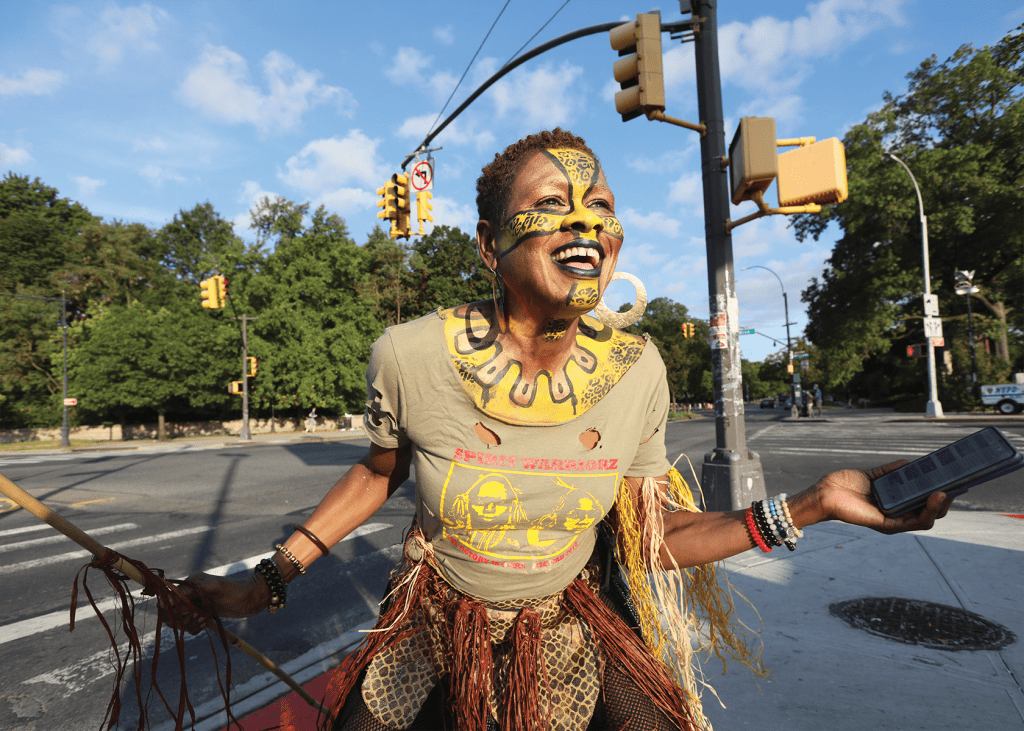
“Carnival came out of the fight for cultural expression and emancipation,” said Sandra Bell, a third-generation Carnival costume designer and producer with City Lore, which is using a Trust grant to help immigrant and folk artists preserve and share their cultural traditions.
Bell, who immigrated from Trinidad at age 12, produced “J’Ouvert Genesis Immersive Experience,” an exhibit at Lefferts Historic House in Prospect Park highlighting the pre-dawn festival that kicks off Carnival in Trinidad and the West Indian Day Carnival Parade in Brooklyn.
“ ‘J’ouvert’ is French for ‘opening of the day.’ We start out at 3:00 a.m. and end when the sun comes up, because that was the only time the emancipated Africans were allowed to have their own kind of Carnival,” Bell said. “They had to go back to work when the sun came up. It was a hard-fought battle for them to get time to celebrate in the way they wanted.”
Creating Community Through Arts Education
Children need space to create, invent, and explore. But school settings too often fail to encourage all students to express themselves.
With a Trust grant, Ifetayo Cultural Arts Academy is providing afterschool programs in Brooklyn rooted in cultural traditions from Africa and the African diaspora. Students study art forms such as West African dance, djembe drums, and gospel music, and develop original work exploring social justice issues.
While 76 percent of students in Long Island’s Westbury School District are Latine, the schools provide few Spanish-language offerings. Teatro Yerbabruja is using a Trust grant to provide Spanish-language performing-arts workshops in these schools.
“Arts education helps kids celebrate different cultures, connect with their communities, and share their visions for change.”
“It is beautiful to perform in a different language,” said Margarita Espada, the nonprofit’s executive director. “It creates a sense of belonging, where students learn that they have a community beyond school and home.”
Our legacy funds, created to support New Yorkers in perpetuity, along with our donor-advised funds, fuel thousands of grants each year to help local arts and culture thrive.
Jim Schmitz, a visual artist and creative technologist based in the Lower Hudson Valley, supports Westchester arts nonprofits through his donor-advised fund at The Trust.
“I know how fulfilling it is to create art,” Schmitz said. “And I want other people to have the same opportunities.”
Danielis, a Teatro Yerbabruja student, agrees.
“Theater pushed me in ways I didn’t expect,” Danielis said. “It taught me to believe in myself, feel more confident, and understand that my story actually matters.”