
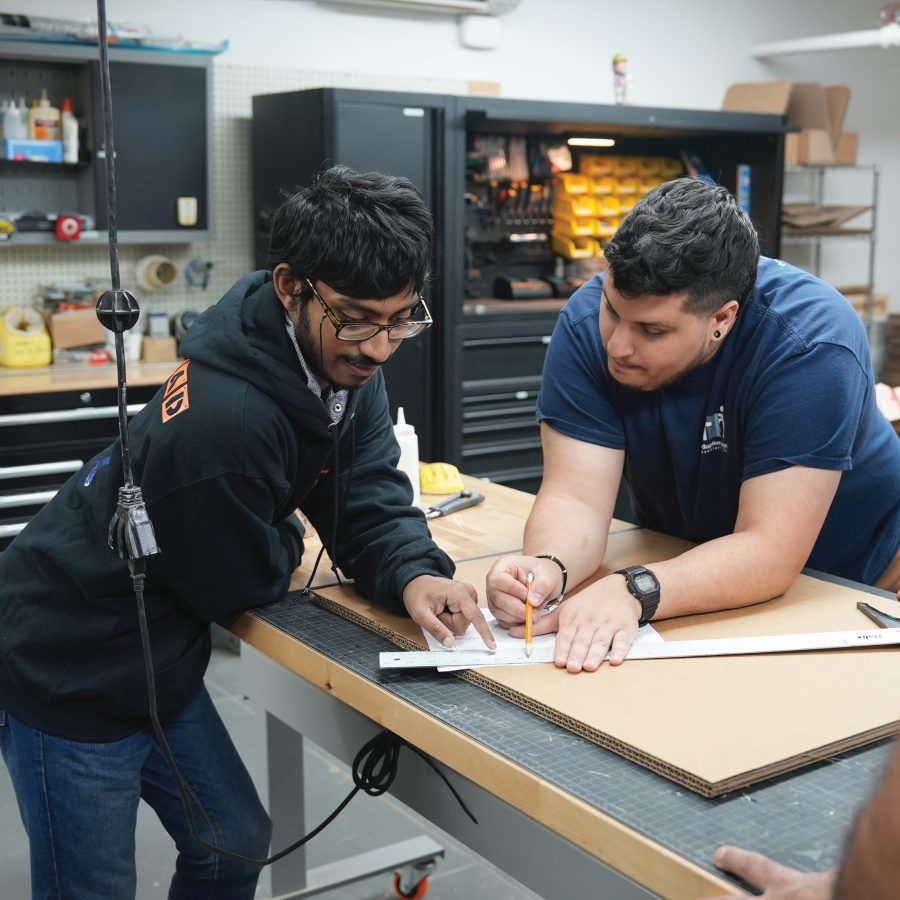
A piece of equipment made from a simple material like cardboard can make all the difference for a student with a disability—from a preschooler transitioning from their wheelchair to participate in circle time to a third-grader with low vision using their desk independently.
“Our core belief is that every child deserves a chance to participate fully at school and at home and in the community,” said Jennifer Hercman, executive director of the Adaptive Design Association, a nonprofit that develops and constructs customized adaptive equipment—including floor-sitters and accessible desks—for children and adults with disabilities.
With a Trust grant, the Association’s Made to Learn program is expanding the nonprofit’s reach by training young adults with intellectual and developmental disabilities in New York City public schools to design and create customized adaptive equipment for children. The program provides the equipment to classrooms free of charge.
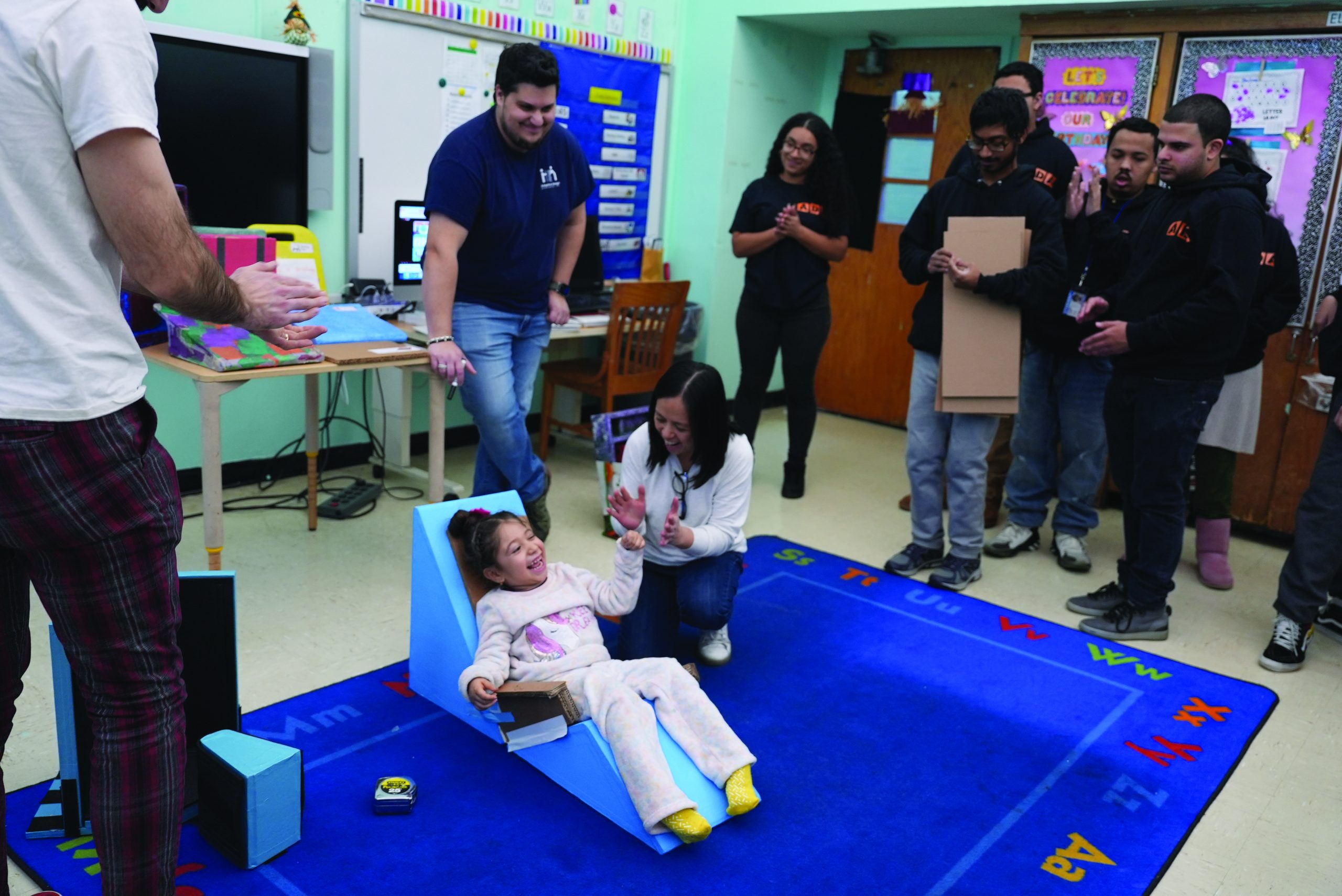
“It’s really important for our students to work directly with the children. This creates meaning for the work they’re doing because they’re able to see how it exists in the community,” Hercman said.
Interacting with the children they are assisting also helps participants build social and emotional skills. Parents and teachers have reported improvements in eye contact, accountability in cleaning and organizing the workshop space, and greater participation in family activities.
Funding for Made to Learn comes, in part, from The Trust’s Jack Goldring Fund, created by Judith Goldring in memory of her brother Jack, who had developmental disabilities.
Through her volunteer work and philanthropy, Judith dedicated herself to providing a better quality of life for people with disabilities—a legacy that lives on through the innovative work her fund supports.
Creating an inclusive workforce
Paraprofessionals can provide vital support for people with disabilities to be able to live and work independently. But in 2023, a shortage of these workers caused half of all disability service providers in New York City to close or reduce their programming.
Social services nonprofit Commonpoint saw an opportunity to address this shortage: Many of the young adults with disabilities involved in its programs wanted to work and could qualify for paraprofessional jobs with the right support and training. A grant from The Trust helped the nonprofit develop a program that prepares young adults with disabilities for jobs as paraprofessionals.
Participants receive training in communication, customer service, and cultural awareness as they work towards their paraprofessional certification. After graduating, they complete paid internships with the Greater New York Hospital Association in a continuing care or rehabilitation setting. The program then matches graduates with employment opportunities in the community, helps them prepare for interviews, and offers support for a year after job placement.
“We’re proud to support nonprofits working on creative models that recognize the unique lived experiences and perspectives young adults with disabilities bring to the workforce,” said Rachel Pardoe, The Trust’s program director for accessibility. “These young people will be tomorrow’s leaders in building inclusivity and accessibility at school, work, and home.”