Huntington Youth Court offers hope & healing.
For a young person, one encounter with the court system can too easily become a life sentence, sparking a cycle of trauma, stigma, and lost opportunities. Huntington Youth Bureau’s Youth Court on Long Island is working to change that.
The Youth Court’s approach is rooted in restorative justice traditions, which emphasize accountability, empathy, and healing and have been shown to greatly reduce recidivism and improve public safety.
In place of typical court procedures, young people’s peers serve as jurors, judges, attorneys, and advocates and assign them projects such as community service, counseling, or enrichment programs, designed to repair harm and rebuild trust. Since its founding in 2000, the Court has trained more than 750 volunteers and resolved over 500 cases in partnership with local schools and Suffolk County’s Department of Probation.
“When our program was first introduced, restorative justice was still a new concept,” said Janine Salgado, executive director of the Huntington Youth Bureau. “The criminal justice system recognized that punitive practices weren’t changing behavior, and we saw an opportunity to guide young people instead of punishing them.”
That vision has only expanded. Schools are now key referral sources, reflecting an investment in education and intervention, and program leaders have prioritized reaching more local teens and their families.
As Huntington’s Latine communities grew significantly, a recent Trust grant supported translation devices, bilingual staff training, and new family-referral initiatives to meet this goal.
“We successfully created the first and only Spanish-speaking youth court in New York State,” said Program Director Manuel Zelaya. “We can now hold peer jury trials entirely in Spanish, fully engaging families who once felt excluded.”
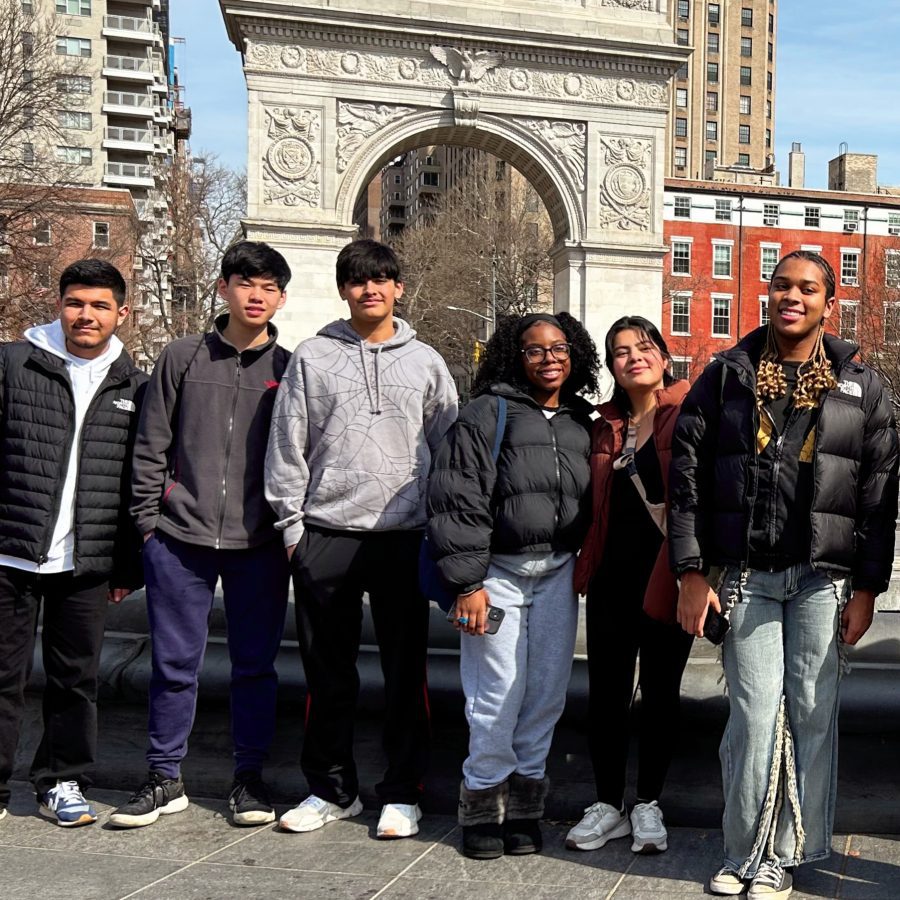
The shift has been transformative: In the past year, 53 young people were referred to the program, 36 from Spanish-speaking families. The court trained 95 new volunteers and selected 13 program ambassadors, experienced youth court members who help train new volunteers, coordinate events, and serve as the public face of the court at schools and community programs.
Many participants return as peer volunteers, and those referred to the program serve on the jury for a peer’s trial as a sanction.
For Salgado, the program’s biggest achievement is how deeply it has engaged Latine young people and their families.
“Parents who once worried about their child’s future now see a solution and a positive trajectory,” she said. “For the youth, it’s life-changing. They gain empathy, acceptance, and a chance to take responsibility in a nonjudgmental environment.”
The program also boasts ripple effects for its participants, volunteers, and the broader community.
“We’ve seen respondents turn their lives around completely,” Zelaya said. “Many become court peers themselves, and are inspired to pursue careers in law, social work, psychology, and other advocacy fields.”
The Trust’s investment in Huntington Youth Court builds on its long-standing commitment to advancing restorative justice and fair policies for young New Yorkers—from supporting New York’s historic Raise the Age campaign, which ended the state’s treatment of minors as adults in criminal court, to helping city schools integrate restorative justice practices.
“A single mistake should not define a young person’s future,” said Trust Senior Program Director Sol Marie Alfonso-Jones. “The Trust is proud to support this transformative effort.”